Cost per square foot is the number buyers use to compare container homes fairly — and the number sellers avoid. A headline price on its own tells you nothing, because units differ in finished size. Here’s how to work out real cost per square foot, and what actually moves the number.
How to calculate cost per square foot
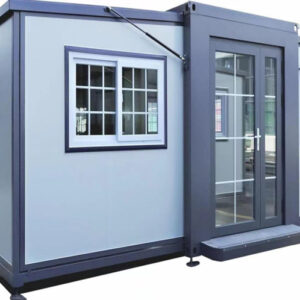
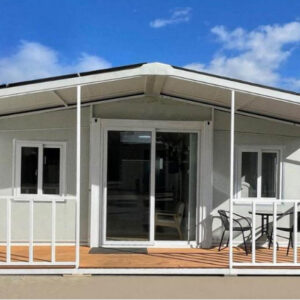
Take the price of the finished unit and divide it by its finished floor area. The detail that catches people out is finished size: an expandable unit that ships small opens out to roughly three times its shipping footprint on site, so you must use the open size, not the folded size.
What actually moves your cost per square foot
- Size. Larger units spread fixed costs (framing, connections) over more space, so cost per square foot usually falls as size rises.
- Finish level. A shell and a fully lined, plumbed unit are different products.
- Insulation and lining. Moving from bare steel to a year-round interior adds cost and value together.
- Shipping. Port-to-port freight per unit drops when units ship together, so a multi-unit order improves the number.
- Foundation and site work. Buyer’s responsibility and site-specific — always budget separately so it does not distort the comparison.
Comparing units fairly
Why container homes land lower per square foot
Container units are built in a factory from standard steel boxes, which removes a lot of the site labour and weather delay that inflates a traditional build. That efficiency is what pulls the finished cost per square foot down — especially on larger and multi-unit orders.
Get a per-square-foot figure for your build
Tell us the size you’re considering and how you want it finished, and we’ll quote it with the finished floor area so you can work out the real cost per square foot. Request your quote here.
Payment is by bank transfer in full. We do not offer financing.