Designing an Off-Grid Container Home
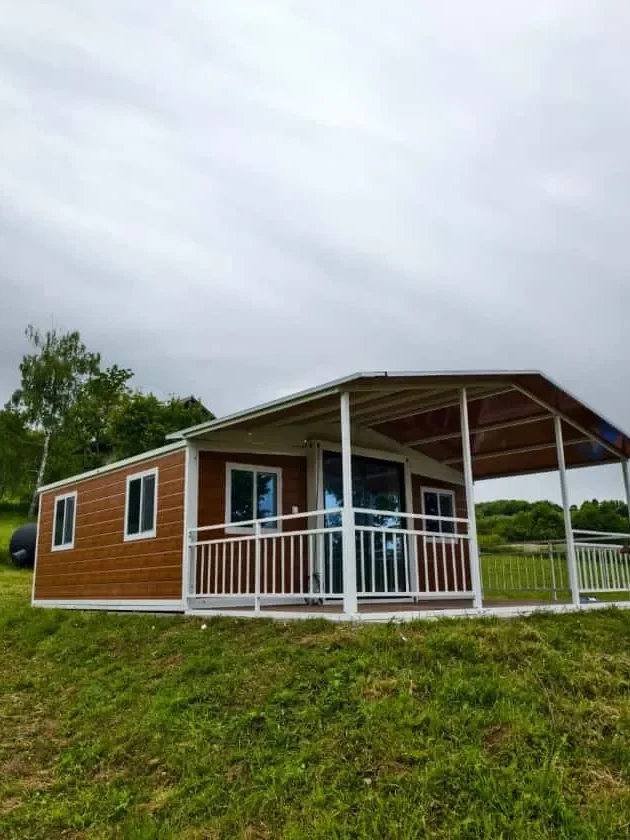
Container homes are naturally suited for off-grid living. Their compact volume requires less energy to heat and cool than a conventional house, and their steel structure provides an ideal mounting surface for solar panels. Here’s how to spec the systems for a completely self-sufficient container home.
Solar Power System Sizing
A 20FT container home (37 sqm) requires approximately 3.5-5 kWh/day for basic living — lights, fridge, laptop charging, water pump. A 40FT (74 sqm) with full appliances runs 7-10 kWh/day. Here’s the recommended configuration:
- Panels: 8x 400W monocrystalline panels (3.2 kW total) for 20FT; 16x for 40FT
- Inverter: 5kW pure sine wave hybrid inverter with MPPT charge controller
- Battery: 10kWh LiFePO4 battery bank (48V) — 1-2 day autonomy
- Mounting: Direct bolt to roof purlins through EPDM gaskets — no roof penetration leaks
Container homes come pre-wired with a solar-ready conduit from roof to utility room. ATV’s models include this as standard — no extra modification needed.
Water Systems
Rainwater Collection: A 40FT roof (29 sqm) collects approximately 500L per 25mm of rainfall. With 1000mm annual rainfall minimum regions, a 10,000L cistern provides year-round supply. The standing-seam metal roof is food-grade safe for potable collection when fitted with a first-flush diverter.
Filtration: 3-stage system recommended: sediment pre-filter (50 micron) -> carbon block (5 micron) -> UV sterilization. Gravity-fed systems work if elevation allows; otherwise a 12V DC diaphragm pump (3.5 GPM) draws 4A at 12V.
Greywater: Simple diversion to subsurface irrigation for landscape plants. Avoid blackwater mixing — keep greywater separate for easiest treatment.
Waste Management Options
- Composting toilet (recommended): Airhead or Separett-style, zero water, zero plumbing. Monthly compost removal. Best for part-time use and off-grid sites.
- Incinerating toilet: Propane or electric, reduces waste to ash. Higher operating cost but zero maintenance.
- Conventional septic: Possible with 1000L septic tank + leach field. Requires percolation test and local permits. More appropriate for permanent residences on larger lots.
Heating and Cooling Off-Grid
A 20FT container requires approximately 6,000 BTU of cooling (a small mini-split draws 550W). For heating in cold climates, a 5kW diesel heater (12V, 0.3L/hr) or wood-burning stove works. The container’s steel structure acts as a heat sink — proper insulation is critical. ATV models use 100mm EPS sandwich panel insulation (R-14 equivalent) as standard, with optional upgraded polyurethane foam (R-21).
Cost Estimates
Total off-grid system cost for a 40FT container home ranges from $12,000-$18,000 installed, depending on battery capacity and water storage. This compares to $25,000-$40,000 to run utility lines to the same remote location in most jurisdictions.
ATV Container Works delivers premium expandable container homes and flat pack kits worldwide. Browse our models or contact Jake at jake@atvworldwide.com for pricing and availability.
📬 Stay Updated — Container Home Guides
New posts, sale prices, and exclusive shipping discounts. Unsubscribe anytime.
Reply “Subscribe” to get new posts. No spam, ever.
🔢 Want an instant estimate?
Use our Container Home Cost Calculator — get unit price + shipping + setup in seconds.
📩 Get a Personalized Container Home Quote
Tell us your model and location — Jake or Emily will reply within 24 hours with exact pricing + shipping
No spam, unsubscribe anytime. We ship globally from Shanghai.
Related Articles: Learn more about can a container home withstand a hurricane. Learn more about are container homes actually worth it. Learn more about container home costs in Canada. Learn more about do container homes rust over time. Learn more about container home depreciation and resale value. Learn more about container home insurance costs and requirements. Learn more about buying used container homes. Learn more about container home kitchen design. Learn more about container home bathroom design. Learn more about container home temperature control. Learn more about container homes in Europe. Learn more about container homes in Australia. Learn more about what size container home for a 3 bedroom house. Learn more about container home vs modular vs manufactured.