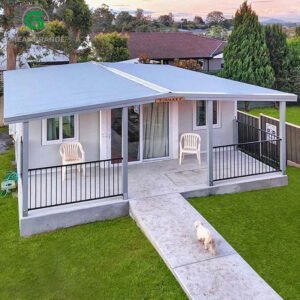
Every maker reaches the same wall eventually. The garage is full, the shed is damp, and the kitchen table is covered in clamps and sawdust. What you actually want is a room that belongs to the work — a place you can leave mid-project without packing it all away. A container workshop does exactly that, and it turns up already built.
Why a steel box beats a timber shed
The reason is the shell. A container is engineered to cross an ocean stacked under weight, so on land it simply does not care about weather. It will not sag, warp, or rot the way a wooden shed does after a few wet winters. Once the inside is insulated and lined, you get a room that holds heat, stays dry, and shrugs off damp and pests. In a workshop that matters, because tools and steel do not forgive moisture.
What you can actually do in one
Most people use theirs as a general workshop — a bench along one wall, tool storage along the other, a clear middle for the work. Others make it specific: a welding bay with a proper extraction fan, a woodworking shop with a dust system, a bike or car-detailing room, or a small spray booth. Because the interior is fitted from scratch, the layout bends to whatever you build.
Sizes, and how to choose
Work out the longest thing you will ever build, then add a metre in every direction. Beyond that, the common picks are:
- 10FT — a compact bench and tool store for one person.
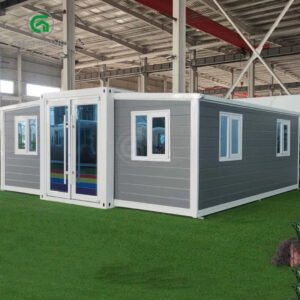
- 20FT expandable — the most popular pick; a full bench, storage, and room to move.
- 40FT — for a serious shop with machines, a vehicle bay, or two people working.
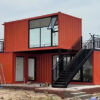
- Double-storey — when the plot is small but the work is big.
Getting power and water in
Decide this before the unit lands. Run a proper supply from the house to a small consumer unit at the unit — an armoured cable in a trench, done by a qualified electrician. For water, a single cold feed to a sink or an outside tap is usually enough for a workshop; a full bathroom only makes sense if you plan to spend whole days out there. If you will run heavy tools, size the supply for the load, not for a couple of lights.
How it reaches you
Units ship port-to-port (FOB) from our factory. That price covers the unit and the sea freight to your nearest port; the last leg to your site is arranged on your side, either by you or a local haulier. Because units fold where they can, several can travel together and that keeps freight efficient for multi-unit orders.
What it costs, and how you pay
Pricing is quoted per order, since size, specification, and quantity all move the number. As a guide, the 10FT unit starts at $11,995 USD, the 20FT expandable runs from $15,995 USD, and the 40FT models start at $24,995 USD. Payment is by bank transfer in full — there is no financing, which keeps the deal plain and the price honest.
The point of it
A workshop is not really about storage. It is about having somewhere the work can stay, mid-thought, until you come back to it. A small steel building in the corner of the yard gives you that for far less than an extension, and it is usable within days of landing.
Your next step
Tell us the size you need and the port nearest you, and we will come back with a firm quote. Reach us at info@atvworldwide.com or on WhatsApp at +1 647 786 9127.